2026 Top Digital Welding Machine Types for Global Buyers
Choosing the right Digital Welding Machine in 2026 requires more than comparing amperage, price, or touchscreen features. Global buyers must examine material thickness, duty cycle, voltage stability, service access, software support, and operator training. A compact inverter model may suit a repair workshop, while a pulse MIG system can improve control on thin stainless steel. Robotic platforms demand different calculations. They need integration, programming skills, and dependable replacement parts.
John C. Lippold, a respected welding-metallurgy expert, has stated, “Welding is both a science and an art.” That principle still matters. A machine can display precise settings, yet poor grounding or contaminated wire can produce weak welds. Small details matter.
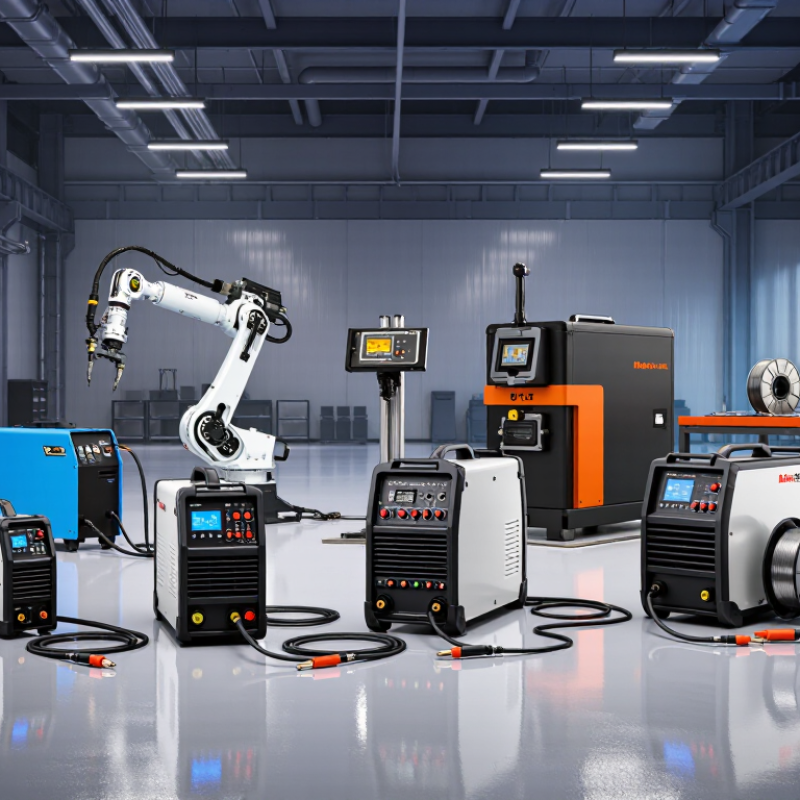
This guide introduces the leading Digital Welding Machine types expected to attract international buyers in 2026. It compares inverter welders, digital MIG and TIG systems, multi-process machines, pulse welding equipment, resistance welders, and automated robotic solutions. Each type has practical strengths and limits. Some offer excellent energy efficiency but require skilled setup. Others provide simple operation but limited process flexibility.
The market is moving quickly. Connectivity, waveform control, data recording, and remote diagnostics are becoming more common. Still, newer is not always better. A highly connected machine may create unnecessary complexity for a small fabrication team. Buyers should question marketing claims, request real duty-cycle data, and confirm local technical support before purchase. This review offers a practical starting point, while recognizing one unavoidable issue: application conditions differ widely across regions, workshops, and production goals.
What Defines a Digital Welding Machine in 2026
In 2026, a digital welding machine is more than an inverter with a bright screen. It uses processors, sensors, and software to control current, voltage, wire speed, and arc timing. These values are measured continuously, not adjusted only by a front-panel knob. The result is a more repeatable arc across changing joint conditions. That distinction matters.
A true digital system normally provides closed-loop feedback, programmable welding waveforms, and clear parameter control. Some models also record weld data through USB, Ethernet, or wireless connections. During a six-millimeter fillet weld, technicians can compare preset values with actual output. This helps identify poor grounding, unstable wire feeding, or incorrect gas flow. A detailed display alone proves little.
Global buyers should also examine duty cycle, calibration stability, cooling performance, and service access. A machine may support many processes, yet its software can feel slow or confusing. I would not treat every connected machine as intelligent. Operators still need sound technique and material knowledge. Digital controls cannot repair contaminated steel or a badly prepared joint. That is the uncomfortable part. Before purchase, test the machine with common materials, different cable lengths, and real workshop conditions. Reliability appears during repetition, not during a short showroom demonstration.
Core Features and Technologies Across Welding Machine Types
Digital welding machines now cover MIG/MAG, TIG, stick, and laser-assisted systems. Each type uses different controls for heat, arc stability, and material thickness. Inverter power sources remain common because they reduce size and support precise current adjustment. A fabricator may set 180 amps for a thin steel bracket, then switch to pulsed output for cleaner aluminium welds.
Core technologies include IGBT power modules, digital waveform control, and automatic parameter matching. Synergic MIG systems adjust voltage when the operator changes wire speed. Pulse functions reduce spatter and help control heat input. TIG machines often add high-frequency starting, downslope control, and adjustable gas pre-flow. Stick welders benefit from arc-force control and anti-stick protection. These features matter near narrow joints, where unstable starts can damage a finished edge.
Buyers should compare duty cycle, input voltage, cooling method, and service access. A 60% duty cycle at 250 amps is more useful than a higher rating at an unclear test condition. Dust protection and voltage tolerance deserve attention in mobile workshops. Digital displays improve repeatability, but menus can slow an operator during urgent repairs. A perfect interface does not replace training. Field testing with the actual wire, electrode, gas, and base metal remains essential. Some product specifications still look impressive while omitting cable length, torch quality, or cooling limits. That gap deserves careful questioning.
How to Choose the Right Digital Welding Machine
Choosing the right digital welding machine starts with the joint, not the screen. TIG machines suit clean stainless steel and aluminum work. MIG machines support faster production on mild steel. Multi-process units offer flexibility, but their controls can become confusing under pressure. Pulse and synergic modes help stabilize arc length and reduce spatter.
Check actual workload before buying. A compact 200-amp inverter may handle repair work, while fabrication shops often need 300 amps or more. Duty cycle matters. A 60% duty cycle at 200 amps means six minutes of welding within ten minutes. MarketsandMarkets forecasts the global welding equipment market to approach 20 billion dollars by 2028. That growth reflects rising automation and demand for controllable processes. Still, market growth does not make every digital machine suitable.
Operators should compare input voltage, wire compatibility, waveform control, enclosure rating, and service access. American Welding Society workforce research expects the industry to need about 330,000 welding professionals by 2028. Simple interfaces can shorten training time. The U.S. Bureau of Labor Statistics also reports about 42,600 annual openings for welders, cutters, solderers, and brazers through 2033. That makes repeatable settings valuable. A common purchasing mistake is trusting maximum amperage alone. I would test arc stability on the exact material and thickness. Screens look impressive. Real beads matter more.
Global Applications, Standards, and Buying Considerations
2026 Top Digital Welding Machine Types for Global Buyers
Global applications, standards, and buying considerations should guide digital welding machine selection. In fabrication shops, inverter MIG/MAG machines handle structural steel, stainless steel, and repeated production work. TIG machines suit thin sheet, hygienic tubing, and visible joints. MMA units remain useful on construction sites because they tolerate long cables and changing outdoor conditions. Multi-process machines offer flexibility, but their settings may confuse inexperienced operators.
Digital control improves arc stability, parameter storage, and weld traceability. However, a screen does not guarantee quality. Buyers should check compliance with IEC 60974-1 for welding equipment and IEC 60974-10 for electromagnetic compatibility. ISO 3834 may also matter when a project requires documented welding quality. Local electrical safety rules, plug systems, voltage ranges, and import documentation need separate verification. One certificate rarely covers every market.
I have seen buyers focus on peak amperage and overlook duty cycle. That mistake becomes costly during hot production shifts. Review the rated duty cycle, cooling method, IP protection, generator compatibility, and service access. Data logging can support audits, but only when operators record accurate information. Spare parts availability matters more than attractive software. It is also wise to request sample welds using the actual material and consumables. A machine that performs well in a showroom may struggle with site power fluctuations. Some specifications remain unclear. Ask for test conditions, calibration records, user training, and realistic energy consumption before purchase.
2026 Top Digital Welding Machine Types for Global Buyers
Representative output-current ranges by welding machine type. Actual ratings vary by model, duty cycle, input power, and application. Buyers should verify compliance with IEC 60974-1 and process classification under ISO 4063.
MMA machines are widely used for maintenance and construction, while MIG/MAG and TIG systems support fabrication and precision work. Multiprocess units are suitable for flexible workshops, and submerged arc equipment is mainly selected for high-deposition production welding. Current ranges shown are representative market ranges rather than mandatory standards.

 WeChat Online Service