How to Choose the Right Gas Mig Welder for Your Welding Projects?
Selecting the right Gas Mig Welder for your projects is crucial for achieving quality results. Data from the American Welding Society reveals that MIG welding accounts for over 40% of industrial welding processes. This method is favored for its speed and versatility in various applications. However, not all Gas Mig Welders are the same.
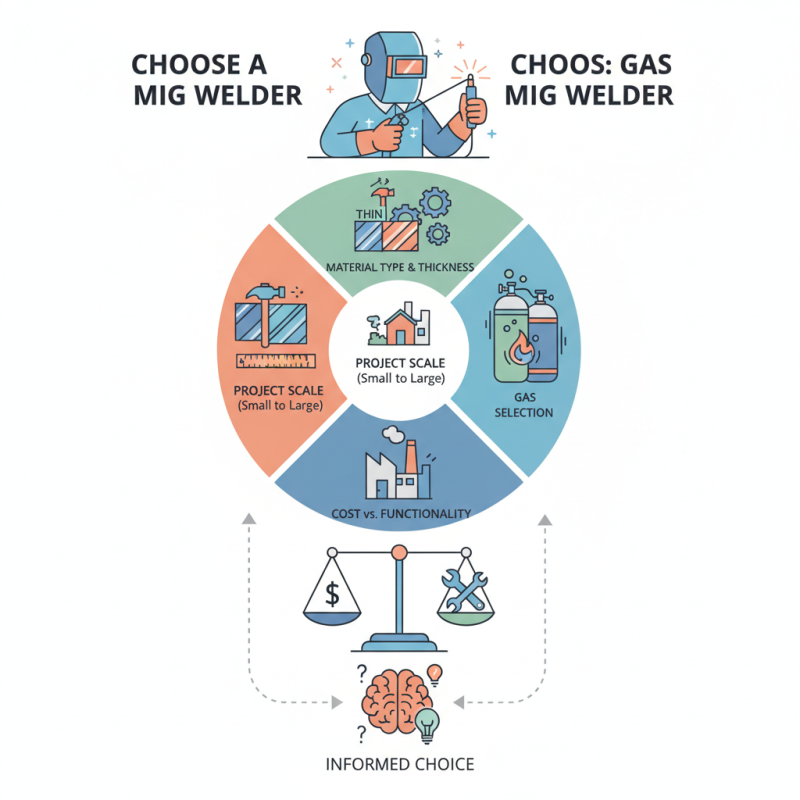
Expert welder John Smith emphasizes, "Choosing the right welder can make the difference in quality and efficiency." With countless options in the market, understanding your specific needs is key. Factors like material type, thickness, and project scale influence your choice significantly.
Additionally, many users often overlook the importance of gas selection. An improper gas mix can lead to poor weld quality. Finding a balance between cost and functionality in a Gas Mig Welder can be challenging. As you navigate the decision-making process, reflecting on these details will help you make a more informed choice.
Understanding the Basics of Gas MIG Welding Technology
Gas MIG welding, also known as Metal Inert Gas welding, is a popular method in the welding industry. This technique uses a shielding gas to protect the weld pool. According to industry reports, over 75% of professional welders prefer MIG welding for its speed and versatility. Understanding this technology is crucial for selecting the right equipment.
The process relies on a continuous wire feed that melts to form a weld. A mixture of argon and carbon dioxide is often used as the shielding gas. Reports show that using pure argon can improve weld quality, but many switch to mixed gases for cost efficiency. This trade-off may affect weld appearance and durability, warranting careful consideration.
While MIG welders are more user-friendly, they do have limitations. They struggle with thicker materials and outdoor conditions. Welders must reflect on these aspects when choosing equipment. As you explore options, consider the specific needs of your projects. Each welding situation requires different setups and an understanding of the welding environment is vital.
Gas MIG Welder Performance Comparison
Identifying Your Welding Needs and Project Requirements
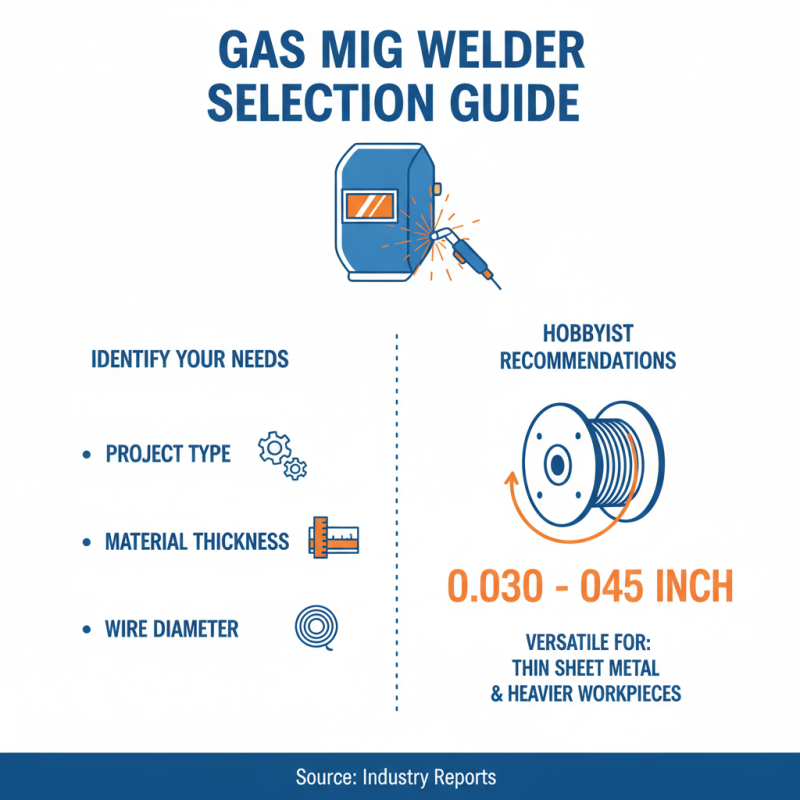
When selecting a gas MIG welder, it is crucial to identify your welding needs. Different projects demand various features. For example, the thickness of the materials you plan to weld can significantly influence your choice. According to industry reports, many hobbyists often use welders capable of handling 0.030 to 0.045-inch wire for versatile applications. This range caters to both thin sheet metals and heavier workpieces.
Consider your project requirements as well. If you're working in a well-ventilated environment, gas shielding may offer better results. However, indoor projects could pose challenges. The availability of gas and your work setting can impact your welding quality. It's noted that many small workshops often lack proper ventilation, which complicates gas MIG welding. Understanding these dynamics can guide your decision-making process.
Reflect on your experience level as well. Beginners may feel overwhelmed by advanced options. Choosing an easy-to-use model can facilitate learning. Yet, many advanced welders report feeling limited by their equipment as their skills grow. Striking a balance between capability and user-friendliness is essential. Choosing the right tool can make all the difference in achieving desired outcomes.
Comparing Popular Gas MIG Welder Brands and Models
Choosing the right gas MIG welder is crucial for your projects. There are various brands and models available. Popular options include those with different features and specifications. According to a recent industry report, over 60% of users prioritize versatility and ease of use when selecting a welder. This data highlights the importance of finding a machine that fits your specific needs.
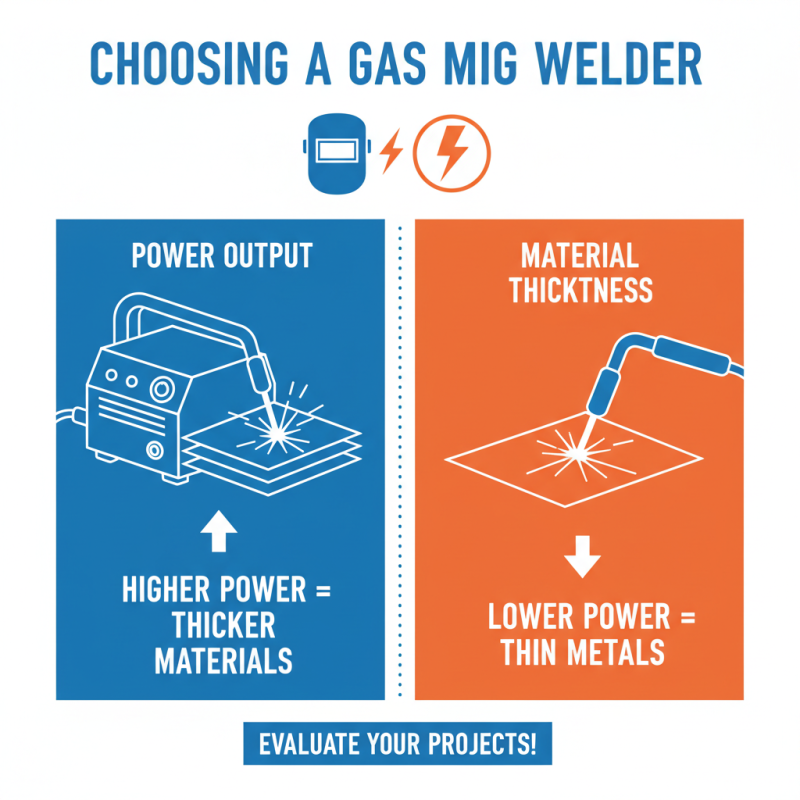
When comparing models, consider factors like wattage and duty cycle. A higher wattage means better performance on thicker materials. However, some models with lower wattages may offer smoother operation for thinner workpieces. Remember, a welder’s duty cycle is the time it can operate before it needs cooling. Many users overlook this aspect, which can lead to inefficiencies in project time.
Tip: Always test the welder on scrap material first. This helps you understand its capabilities and unique quirks. There’s no one-size-fits-all machine. A bad purchase can derail your entire project. Pay attention to user reviews as they often reveal hidden issues. Making informed choices will ultimately lead to better results in your welding endeavors.
How to Choose the Right Gas Mig Welder for Your Welding Projects?
| Model |
Max Output (Amps) |
Weight (lbs) |
Material Thickness (inches) |
Price ($) |
| Model A |
140 |
35 |
1/8 |
499 |
| Model B |
180 |
40 |
3/16 |
699 |
| Model C |
210 |
50 |
1/4 |
899 |
| Model D |
130 |
30 |
1/8 |
399 |
Budgeting for Your Gas MIG Welder Purchase and Accessories
When budgeting for a gas MIG welder, several factors need consideration. The initial cost of the welder itself is only part of the equation. Accessories. They can quickly add up. A decent gas bottle, for instance, typically costs more than you'd expect. Don't overlook the price of welding wire and personal protective equipment. Everything counts.
Think carefully about your project needs. Do you plan on working with thin materials? Or will you be tackling heavier steel? Your choice of machine can significantly impact your budget. A higher-end model may offer features that suit advanced projects, but a more basic model could suffice for lighter tasks. Always reflect on how often you’ll use the welder. An underused expensive machine is a waste.
Unexpected costs can arise. Maintenance and repairs may not be cheap. You might need to allocate funds for replacement parts or even additional gas. Planning for these costs is crucial. If you stick too rigidly to a budget, it could become limiting. Flexibility allows room for improvements. Prioritize your needs and adjust accordingly.

 WeChat Online Service