How to Choose the Best Inverter Welding Machine for Your Needs?
Welding is an essential process across various industries. An "Inverter Welding Machine" stands out for its efficiency and portability. According to a recent report by Research and Markets, the inverter welding machine market is expected to reach $1.2 billion by 2025. This growth reflects the rising demand for advanced welding technologies. Users often find themselves overwhelmed by numerous options available.
Choosing the right inverter welding machine requires attention to specific requirements. Power output, duty cycle, and functionality play pivotal roles. Many welders overlook these factors, leading to inefficient performance or safety hazards. A machine that doesn’t suit your needs can result in frustrating welding experiences.
Additionally, features such as weight and size can impact usability. A lightweight inverter welding machine may be great for mobility but might compromise on power. Balancing these aspects is critical. Understanding what you need and what you can compromise on will enhance your welding project outcomes. It's essential to reflect on these choices before making a decision.
Understanding Inverter Welding Machines and Their Advantages
Inverter welding machines have gained popularity due to their efficiency and versatility. These machines use advanced technology to convert electrical current into a stable output for welding. Unlike traditional models, they are lightweight and portable, making them ideal for various projects. Many users appreciate the ease of setup. However, some may struggle with understanding the settings.
These machines offer several advantages. They can operate at different voltage levels. This flexibility allows for precise control. Additionally, inverter machines are energy-efficient. They consume less power while delivering high performance. Many welders find this beneficial for long-term use. Yet, some newer users may overlook the importance of matching the machine to their specific needs.
Despite their benefits, inverter welding machines are not flawless. They may require a learning curve for those new to welding technology. Some features can be complex, leading to confusion. Users should take time to read the manual. Familiarity with the functions may prevent frustrating experiences. Ultimately, careful consideration of all aspects helps in making the right choice.
How to Choose the Best Inverter Welding Machine for Your Needs?
| Model |
Input Voltage (V) |
Output Current (A) |
Welding Process |
Weight (kg) |
Price (USD) |
| Model A |
220 |
200 |
MIG/TIG |
8.5 |
450 |
| Model B |
230 |
150 |
MMA |
7.0 |
350 |
| Model C |
240 |
250 |
TIG |
9.0 |
500 |
| Model D |
220 |
180 |
MIG |
6.5 |
400 |
Key Factors to Consider When Choosing an Inverter Welding Machine
Choosing the right inverter welding machine can be a challenge. Key factors play a crucial role. Consider the material you will be welding. Different metals require different settings. Think about the thickness of the materials as well. A more powerful machine is needed for thicker metals.
Budget is another essential factor. Prices can vary widely, and you want to find a machine that meets your needs without overspending. Take into account the long-term value. Sometimes, a cheaper model might lead to higher costs later due to repairs or replacements.
Tips: Always check the duty cycle. It determines how long you can weld before needing a break. A higher duty cycle means more efficiency. Also, look for portability. If you plan to move it, weight and size matter. Aim for a balance between performance and convenience.
Lastly, remember to evaluate ease of use. Complex machines can be frustrating. Simplicity can lead to a better welding experience, especially for beginners. Don’t overlook the importance of user reviews and feedback. They can provide insight into a machine’s performance over time.
Key Factors to Consider When Choosing an Inverter Welding Machine
Comparing Different Types of Inverter Welding Machines
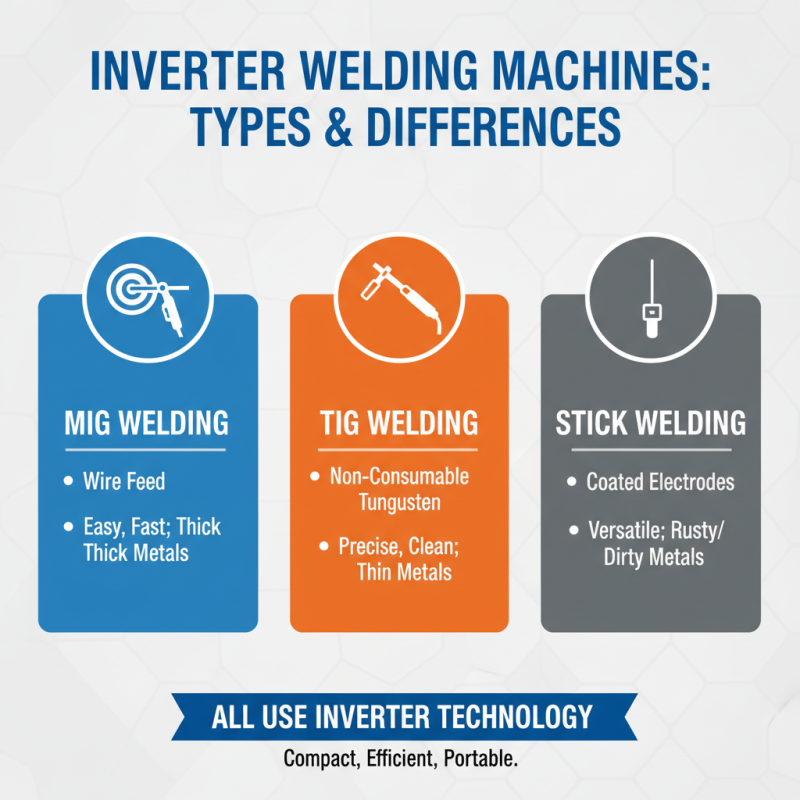
When choosing an inverter welding machine, understanding the differences between types is crucial. There are various models available, each designed for specific tasks. For instance, MIG, TIG, and Stick welding processes can all be performed using inverter technology. Each type brings unique strengths to the table, impacting performance and usability.
MIG welding is popular for its speed and ease of use. It's ideal for thicker materials and provides clean welds with less post-weld cleanup. According to a recent industry report, MIG welding accounts for over 40% of welding applications in manufacturing sectors. In contrast, TIG welding offers precise control and is suitable for thinner, more delicate materials. This method requires more skill but produces high-quality welds. It's often used in aerospace and automotive industries.
Stick welding, though older, still maintains its relevance. It’s versatile and performs well outdoors, even in windy conditions. Many professionals rely on it for construction projects. Issues may arise with different types of electrodes, impacting the quality of welds. These variable factors require reflection and analysis before making a choice. Each type of inverter welding machine has its pros and cons, which must align with user needs and specific applications.
Assessing Power Requirements for Your Welding Projects
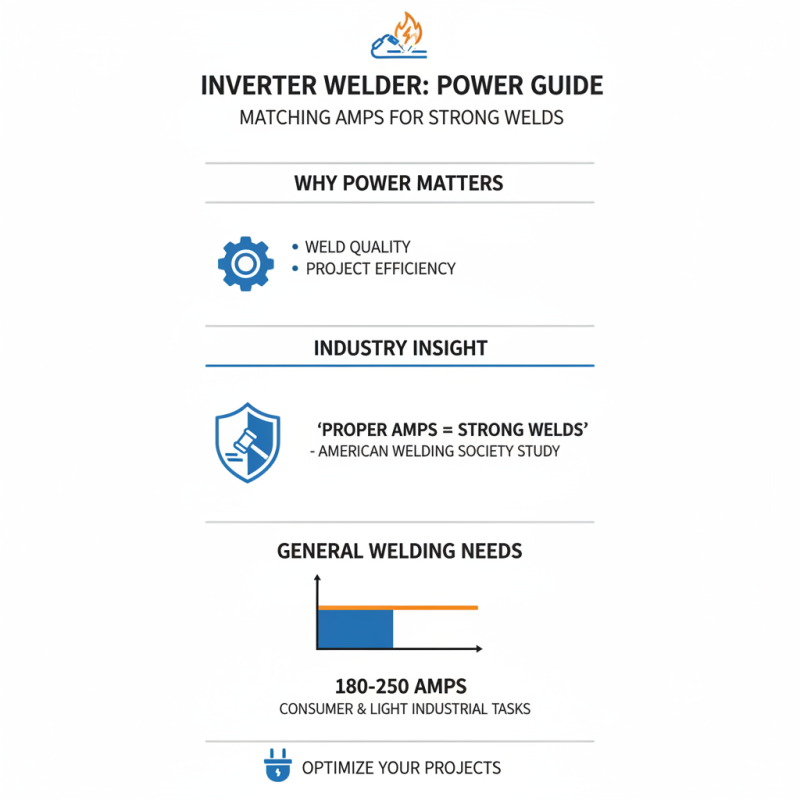
When choosing an inverter welding machine, understanding your power needs is crucial. The power output affects both the quality and efficiency of your welding projects. A study from the American Welding Society states that proper amperage is vital for achieving strong welds. For general-purpose welding, a machine rated between 180 to 250 amps is often recommended. This range typically handles most consumer and light industrial tasks effectively.
Power requirements can vary greatly based on the materials you'll be working with. For instance, welding thin materials requires less power than welding thick steel. Misjudging the amperage can result in weak welds or burnt metal, which can lead to project failures. A discrepancy in the required power may not only waste time but also resources, which is a common pitfall for many novice welders.
Consider the type of projects you'll undertake. Some tasks may benefit from higher output for better penetration, while others need low voltage settings for delicate work. It's worth noting that many users overlook the importance of adjusting settings to match the material thickness. An inverter welding machine offers versatility, but its true efficiency lies in how well it matches your specific needs. Without this alignment, even the best machines can fall short on performance.
Budgeting for Your Inverter Welding Machine Purchase
When budgeting for an inverter welding machine, start with your needs. Determine what types of projects you will tackle. Will you work on automotive repair, fabrication, or home projects? Each application may require different features.
Next, consider your budget range. Inverter welding machines vary widely in price. A cheaper option might save money but could lack durability. On the other hand, a more expensive model may offer advanced features. Balance is key here. Think about your experience level too. Beginners might not want to invest heavily upfront.
Don't forget about additional costs. Accessories like helmets, gloves, and safety gear can add up. Also, consider the cost of maintenance over time. Some machines may require more frequent service. Reflect on these points carefully before making a decision. It's better to invest wisely than to rush into a purchase you'll regret later.

 WeChat Online Service