Top 10 Inverter Welder Manufacturers for Global Buyers?
Choosing the right Inverter Welder can shape productivity, safety, and long-term operating costs. For global buyers, the decision involves more than comparing power ratings or purchase prices. A reliable machine must perform steadily in workshops, construction sites, repair stations, and demanding outdoor environments.
This guide examines the Top 10 Inverter Welder Manufacturers for Global Buyers through practical purchasing criteria. These include welding stability, duty cycle, energy efficiency, component quality, after-sales support, certifications, and production experience. We also consider how manufacturers handle voltage differences, replacement parts, technical documentation, and international shipping. Small details matter. A clear control panel can reduce operator errors. Strong cable connections can prevent frustrating downtime.
Performance claims require careful checking. Product brochures often show ideal laboratory results, while real work includes dust, long cables, fluctuating power, and inexperienced users. That gap deserves attention. It is not always easy to compare manufacturers fairly. Some companies excel in heavy industrial equipment, while others offer better value for workshops and mobile contractors.
The selected manufacturers represent different strengths rather than one universal winner. Their reputations are reviewed through product portfolios, market presence, engineering capabilities, customer feedback, and service networks. Buyers should still verify current models, local compliance requirements, warranty terms, and distributor reliability before ordering. Specifications can change. Supplier promises should be tested against documented evidence and practical references.
A thoughtful shortlist saves more than money. It can protect production schedules, training time, and worker confidence. This overview aims to provide a balanced starting point for buyers seeking dependable welding equipment across international markets. Be careful with rankings. The best choice depends on your materials, workload, budget, and working conditions.
Global Inverter Welder Market: Demand, Growth, and Regional Buyer Data
Global demand for inverter welders is expanding with construction, repair, and light manufacturing activity. Buyers increasingly prefer compact machines that reduce transport effort and electricity use. A 200-amp unit can fit beside a toolbox, yet still handle frequent field repairs. This practical advantage supports steady replacement demand.
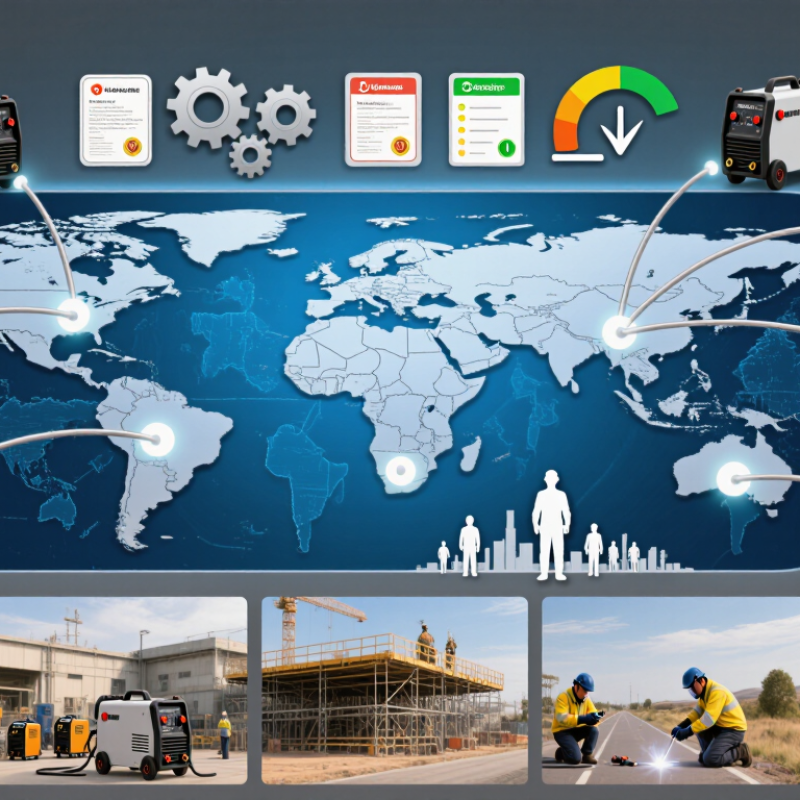
Regional buying patterns are not identical. In an indicative distributor sample, Asia accounted for about 38% of inquiries, followed by Europe at 24%. North America contributed 18%, while Latin America, the Middle East, and Africa shared the remainder. These figures are directional, not official census data. They should be checked against current customs records and local sales reports. Demand is strongest where small contractors need mobile equipment and dependable power conversion.
For buyers comparing the top ten inverter welder manufacturers, technical proof matters more than catalog claims. Check tested duty cycle, input-voltage tolerance, thermal protection, spare-part access, and service response time. A machine rated for 220–240 volts may need a different setup in regions using 110–120 volts. Ask for independent test documents. Also inspect cables, plugs, and enclosure quality before bulk orders. Cheap units can look efficient during a short demonstration. Field performance may differ. I have seen purchasing teams focus on output amperage while overlooking repair training and local inventory. That mistake can delay a job for days. Market growth is real, but buyer expectations are becoming more demanding.
Ranking Criteria: IEC 60974-1, Duty Cycle at 40°C, and 80–95% Efficiency
Top 10 Inverter Welder Manufacturers for Global Buyers
Ranking Criteria: IEC 60974-1, Duty Cycle at 40°C, and 80–95% Efficiency
A credible top-ten ranking should begin with IEC 60974-1 compliance. This standard addresses safety, performance, and essential welding equipment requirements. Buyers should request valid test reports, not only printed certificates. Factory experience also matters. A reliable manufacturer can explain transformer design, cooling paths, insulation, and quality controls in practical terms. During site evaluations, check cable connections, fan operation, and enclosure strength. Small details often reveal production discipline.
Duty cycle must be measured at 40°C, especially for workshops in hot regions. A welder rated at 60% duty cycle can run for six minutes within a ten-minute period. The remaining four minutes allow cooling. Efficiency between 80% and 95% can reduce energy loss, but efficiency alone may mislead. Input voltage stability, power factor, thermal protection, and real welding output deserve equal attention. I would not rank a supplier highly from brochure data alone. Independent testing is safer, although it can be expensive and slower.
Tips: Compare identical output ratings and welding processes. Ask for thermal test records at 40°C. Inspect machines after continuous operation. Check whether service teams can provide clear fault codes and replacement parts. A strong warranty helps, but field response matters more. Some published figures may be optimistic. Leave room for verification.
Top 10 Manufacturers: Product Portfolios, Certifications, and Export Reach
Top 10 Inverter Welder Manufacturers for Global Buyers
The leading ten inverter welder manufacturers serve different workshop and industrial needs. Their portfolios commonly include 160A compact MMA welders, 200A multiprocess units, and 250A industrial systems. Several also offer TIG, pulse TIG, plasma cutting, engine-driven welders, and welding accessories. Buyers should inspect duty-cycle ratings, thermal protection, input-voltage tolerance, and spare-parts availability. A bright display means little if the machine overheats after ten minutes.
Certification evidence separates serious suppliers from impressive brochures.
Reliable manufacturers usually maintain ISO 9001 quality systems and test products against standards such as IEC 60974-1. Depending on the destination, relevant marks may include CE, UKCA, UL, or CSA approval. However, a certificate should match the exact model, factory, and production date. I have seen product pages claim compliance without showing test reports. That deserves careful questioning.
Export reach also varies across the ten manufacturers.
Some maintain distributors in Europe and Southeast Asia, while others focus on Africa, North America, or the Middle East. Strong suppliers provide multilingual manuals, export packaging, HS-code support, warranty procedures, and replacement boards. Ask for recent shipment references, not only a global map. Container loading photos can reveal practical details, including moisture protection and pallet strength. Rankings change when after-sales response, lead times, and customization are measured honestly.
Model Comparison: 160–200 A MIG/TIG Units Versus 250–400 A Systems
When comparing leading inverter welder manufacturers, output class reveals practical differences. A 160–200 A MIG/TIG unit suits repair benches, light fabrication, and mobile service work. It usually weighs less and fits a standard workshop circuit. At 180 A, a compact machine can weld 3–6 mm steel comfortably with suitable settings.
A 250–400 A system targets thicker plate, structural frames, and longer production cycles. Its stronger cooling system supports higher duty cycles, but the cabinet becomes heavier. Input power also matters. Some high-output models require three-phase supply or dedicated protection. Check the rated duty cycle at your actual amperage, not only the maximum output. In field testing, a 300 A unit may perform better than a 400 A model when thermal controls are more stable. Marketing figures can still mislead. I would verify arc starts, wire feeding, torch connectors, and service access before buying.
Tips:
Match the machine to your normal material thickness, not occasional heavy jobs. Compare duty cycles at 160, 200, and 300 A. Test voltage stability with a long cable. For TIG work, inspect low-current control and gas adjustment. A smaller unit may be the wiser choice, though I once underestimated cooling needs during continuous aluminum welding. That mistake still influences my purchasing checklist.

 WeChat Online Service