Choosing an Electric Welding Machine is not simply a matter of comparing amperage, price, and brand names. It is a practical decision shaped by material thickness, welding process, duty cycle, workspace, and operator experience. A compact inverter may perform beautifully on light fabrication, while a larger transformer machine may remain steadier during demanding workshop work. The right choice begins with the job, not the advertisement.
Welding engineer Duane K. Miller is widely respected for his work in welding technology and quality control. His practical message is often expressed this way: “Good welding begins with good preparation.” That principle matters when evaluating an Electric Welding Machine. A machine should offer stable arc control, readable settings, suitable electrode compatibility, and dependable thermal protection. Check the input voltage carefully. Confirm the duty cycle. Inspect the cables, connectors, cooling vents, and warranty terms before purchase.
Small details matter.
Real experience also exposes uncomfortable limitations. A powerful machine cannot correct poor joint cleaning, incorrect polarity, or careless parameter selection. Beginners may choose maximum amperage, expecting stronger welds, yet excessive heat can warp thin steel and weaken control. I have seen specifications look impressive while the supplied leads felt short and inflexible. That kind of detail is easy to overlook. It should not be.
This guide will examine machine types, welding processes, power requirements, safety features, and operating costs. It will also consider where expert specifications meet actual workshop conditions. No single Electric Welding Machine suits every user. The best decision remains a balanced one, based on honest workload assessment, verified technical data, and room for learning.
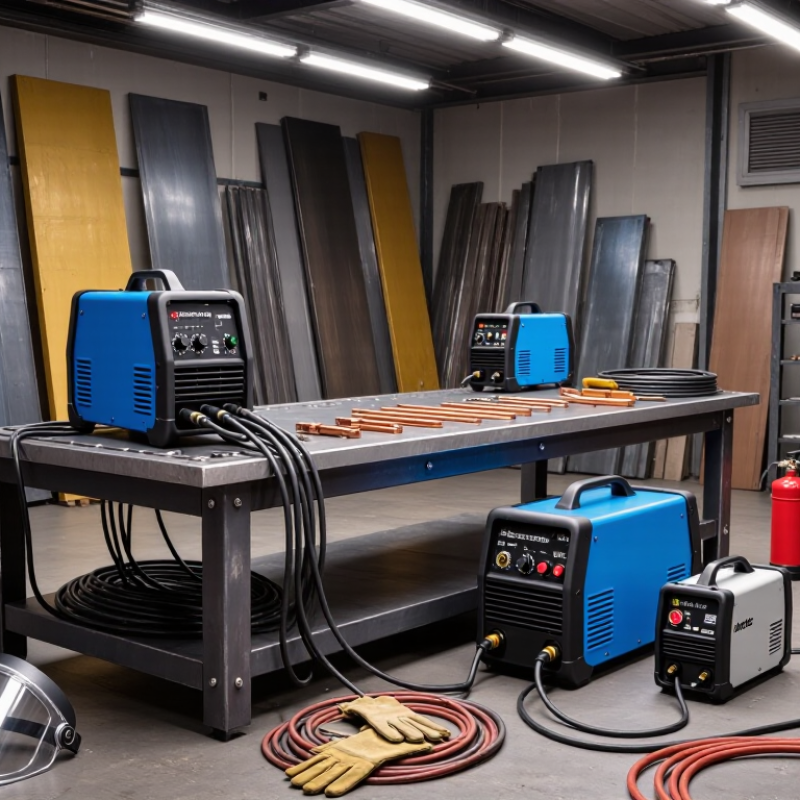
ISO 4063 assigns standardized reference numbers to welding processes, making equipment specifications easier to compare. Check the process number on a job sheet or procedure, not only the machine’s sales description. For example, 111 denotes manual metal arc welding, commonly called stick welding. It can suit outdoor repair work where wind may disturb shielding gas. Electrode changes and slag removal take time. Small details matter.
Process 131 is MIG welding with solid wire and inert shielding gas; 135 is MAG welding with solid wire and active gas. Both feed wire continuously, but gas choice affects the process and the weld. Process 141 is TIG welding, often chosen for controlled work on thinner sections. It requires careful coordination and usually progresses more slowly. Fit matters.
Match the machine to the process, then check its output range, input supply, duty cycle, and gas or wire-feed connections. A 200-amp rating alone says little if the machine cannot sustain the required current at the job’s duty cycle. Compare the material, thickness, joint position, and available power before buying. It is easy to overfocus on the process number. It narrows the options, but does not choose the machine. Confirm requirements with a qualified welding professional when a written welding procedure applies.
How to Choose an Electric Welding Machine
Match Input Voltage and Phase to the Machine’s Rated Supply
Choosing a welding machine starts with the power available at your worksite. Check the rating plate before comparing output current or duty cycle. It should show the required input voltage, frequency, and phase. A single-phase machine will not automatically suit a three-phase supply. The reverse assumption can also cause trouble. Never rely on a similar-looking plug.
I have seen welders test a machine on an unsuitable circuit because the voltage seemed close enough. That shortcut can damage internal components, trip protective devices, or create unstable arcs. Compare the machine’s rated supply with the measured site voltage. For example, a machine rated for 230 V single-phase needs a compatible 230 V circuit with suitable capacity. A unit rated for 400 V three-phase requires all three phases and correct wiring. Local electrical rules should guide installation, especially for workshop modifications.
Tips: Photograph the rating plate before purchasing. Ask a qualified electrician to verify voltage, phase, breaker size, and cable capacity. Check whether voltage tolerance is stated. Do not assume an adapter solves a phase mismatch. Keep the supply cable short and properly sized when practical. I still recheck these details before commissioning equipment; specifications can be misread, especially in poor lighting. A quick assumption is rarely worth the repair bill.
| Rated Input Voltage | Phase | Typical Frequency | Typical Welding Output Range | Common Supply Arrangement | Suitable Applications | What to Verify Before Connection | Compatibility Guidance |
|---|---|---|---|---|---|---|---|
| 120 V AC | Single-phase | 50/60 Hz | Approximately 90–140 A | Dedicated 15–20 A branch circuit, depending on the machine rating | Light maintenance, thin sheet metal, small repairs, and occasional hobby work | Confirm the nameplate voltage, maximum input current, plug type, branch-circuit rating, and extension-cord size. | Use only when the machine is specifically rated for 120 V. A 230 V-only machine cannot be safely operated from a 120 V outlet. |
| 208–230 V AC | Single-phase | 50/60 Hz | Approximately 160–250 A | Dedicated 30–50 A branch circuit is common, but the exact requirement depends on the input current and duty cycle. | General fabrication, repair work, structural components, and medium-thickness steel | Check whether the machine accepts both 208 V and 230 V, and verify the required overcurrent protection from the installation instructions. | 208 V and 230 V are not automatically interchangeable. Use the machine’s specified voltage range and account for voltage drop on long circuits. |
| 208–230 V AC | Three-phase | 50/60 Hz | Approximately 250–400 A | Industrial three-phase feeder with correctly sized disconnect and overcurrent protection | Production welding, higher duty-cycle operation, and continuous shop fabrication | Confirm phase count, phase-to-phase voltage, frequency, grounding method, and the machine’s required input amperage. | A three-phase machine should not be connected to a single-phase supply unless the manufacturer explicitly permits that configuration. |
| 380–415 V AC | Three-phase | 50 Hz | Approximately 250–450 A | Industrial three-phase distribution system, commonly used in many 50 Hz regions | Heavy fabrication, pressure-vessel work, machinery manufacturing, and high-duty-cycle welding | Verify the actual line-to-line voltage, phase sequence requirements, protective device rating, and local electrical-code requirements. | Do not assume that a machine rated for 400 V can accept 480 V. The allowable voltage range must be stated on the nameplate or technical documentation. |
| 460–480 V AC | Three-phase | 60 Hz | Approximately 300–500 A | Industrial three-phase service with a dedicated disconnect | Large fabrication lines, automated welding cells, and extended high-output operation | Check the rated supply range, transformer capacity, feeder conductors, grounding, and required short-circuit protection. | A 480 V supply must match a machine designed for that voltage. Connecting a lower-voltage machine to 480 V can cause severe damage and safety hazards. |
| 120/230 V AC | Single-phase | 50/60 Hz | Approximately 90–180 A | Selectable input through a voltage switch, terminal link, or automatic voltage-sensing circuit | Portable maintenance, field service, small fabrication, and locations with different available voltages | Set the input selector or terminal links exactly as instructed before energizing the machine. Confirm the correct plug and circuit for the selected voltage. | Output capacity may be lower at 120 V because the available input current is limited. Always use the output rating specified for the selected input voltage. |
| 230/400 V AC | Three-phase | 50 Hz | Approximately 250–500 A | Dual-voltage industrial three-phase supply with a configured terminal block or input selector | Workshops that may operate from different industrial distribution voltages | Verify the internal links, selector position, phase identification, and input-current requirement for the chosen voltage. | Dual-voltage capability does not mean the machine accepts every voltage. The supply must remain within the exact rated range for the selected setting. |
Choose the machine’s output amperage according to the material thickness, electrode diameter, or wire size. Thin sheet metal needs lower current to prevent burn-through and distortion. Thick steel needs more heat and stronger penetration. A small electrode usually requires less amperage than a large one. For example, a 3.2 mm stick electrode commonly operates around 90–140 amps, but its welding chart remains the safer reference.
Your welding process also changes the required output. Stick welding often needs stable current for starting and maintaining an arc. MIG welding depends on wire diameter, wire speed, shielding gas, and voltage. A 0.8 mm wire suits lighter work, while thicker wire can handle heavier joints at higher output. Check the machine’s duty cycle too. A 200-amp machine may not deliver 200 amps continuously without cooling pauses.
I once chose amperage from thickness alone and ignored wire size. The weld looked acceptable, but penetration was uneven.
Tips
Measure the thickest section, not the thinnest edge. Read the electrode or wire data sheet. Leave adjustment room above your normal setting. Start low, make a short test weld, then inspect the bead, penetration, and spatter. Clean metal improves judgment. So does good lighting.
When choosing an electric welding machine, compare duty cycles measured over the same ten-minute period. IEC 60974-1 commonly uses a 40°C ambient temperature for testing. A rating of 200 A at 60% means six minutes of welding, followed by four minutes of cooling. Read the plate carefully.
Compare machines at your intended welding current, not only at their maximum output. One unit may deliver 180 A at 60%, while another reaches 200 A at 35%. The second machine offers more current, but it may stop sooner during repeated welds. In a fabrication shop, this difference becomes obvious when welding long seams or thick brackets. Thermal protection may interrupt the work before the operator expects it.
Duty cycle is not a complete buying decision. Check the rated welding process, output current, load voltage, and test conditions. A 100% rating supports continuous operation under specified conditions, but it does not mean unlimited use in every environment. Dust, poor ventilation, and a hot workshop can reduce practical performance. I have seen operators focus on amperage and overlook cooling space. That is an easy mistake. Also, a higher duty cycle may increase machine size, weight, and cost. Decide how often the arc will stay lit, then compare realistic ratings. A carefully matched machine usually performs better than the most powerful model on paper.
How to Choose an Electric Welding Machine
Electrical safety should be checked before output current, duty cycle, or price. IEC 60974-1 covers arc welding equipment safety, including insulation, protective bonding, temperature rise, and abnormal operation. Ask for the test report, not only a compliance label. Check the rated input voltage against your workshop supply. A loose earth connection can turn a routine weld into a serious shock hazard. It happens.
The U.S. Bureau of Labor Statistics recorded 5,283 fatal work injuries in 2023. That figure covers all industries, not welding alone, but it reinforces the need for disciplined equipment selection. IEC 60974-10 addresses electromagnetic compatibility, including emissions and immunity. A machine with weak EMC performance may disturb nearby controls, sensors, or communication equipment. Test it near the actual installation, especially beside CNC systems or medical devices. Noise is not always obvious.
Look for documented leakage-current, insulation-resistance, earth-continuity, and EMC tests. Confirm the report matches the exact model and revision. An experienced technician should inspect cables, connectors, ventilation openings, and the enclosure before energizing the unit. Standards reduce risk, but they do not replace maintenance or training. I would also question unusually broad claims, because a certificate can be valid while the installation remains unsuitable. Performance on a clean factory bench may differ from a dusty workshop with long extension leads. That difference deserves attention.